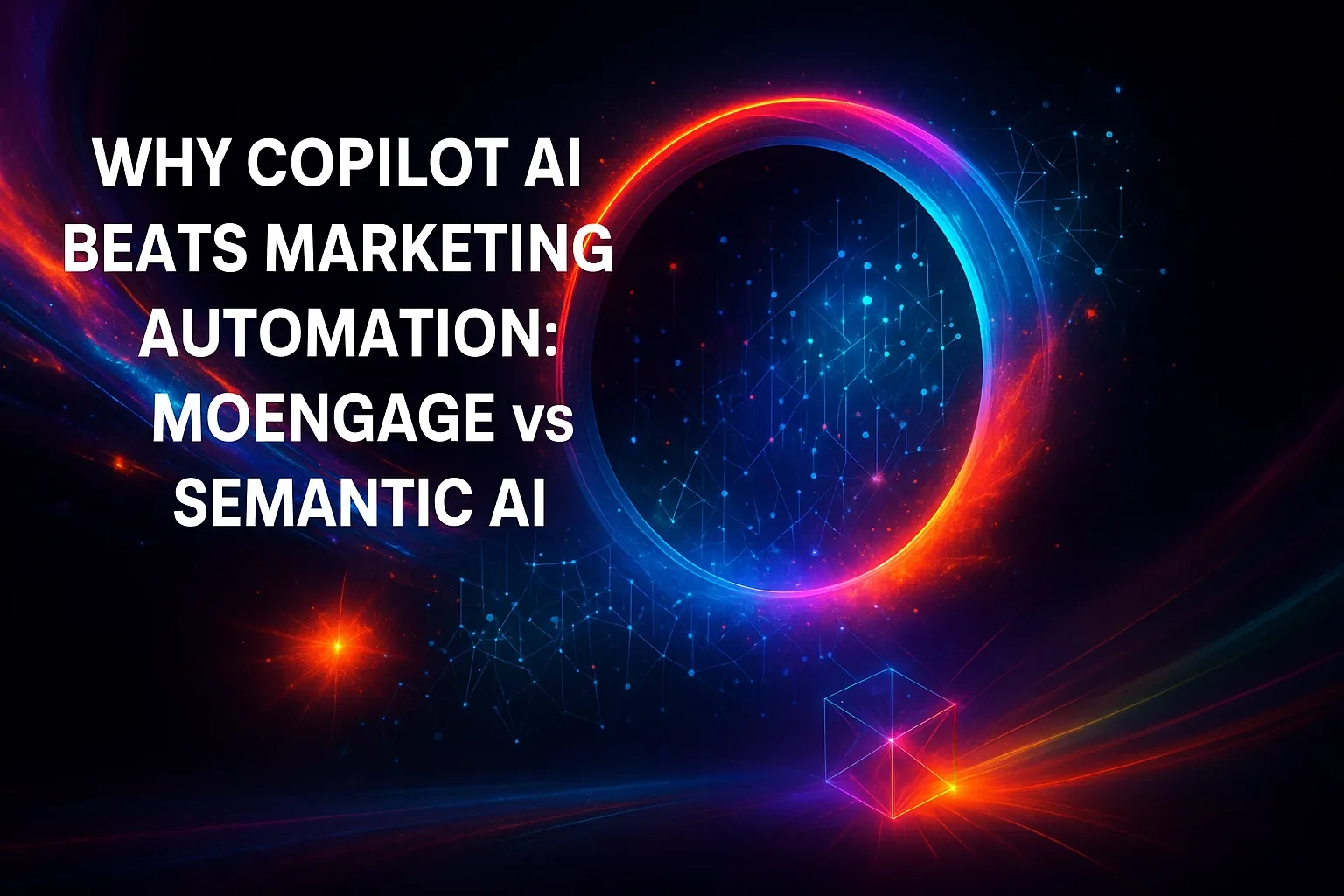
Why Copilot AI Beats Marketing Automation: MoEngage vs Semantic AI
I've been watching e-commerce brands burn through marketing budgets for three years now. The pattern is always the same: they implement MoEngage or Klaviyo, set up their cart abandonment flows, segment customers into basic buckets, and wonder why their retention campaigns feel like throwing darts in the dark.
Here's what most people miss: marketing automation platforms optimize for engagement metrics, not profit margins.
That's the difference between running campaigns and running a business. And it's why semantic AI copilots are quietly replacing traditional automation stacks at the fastest-growing brands I work with.
The Automation Trap: Why More Campaigns ≠ More Profit
Traditional marketing automation platforms like MoEngage operate on a simple premise: identify trigger events, send targeted messages, measure opens and clicks. It's efficient, scalable, and fundamentally flawed.
Here's the mechanism most operators overlook: when you optimize for engagement, you optimize for the loudest customers, not the most valuable ones. Your "high-engagement" segments often include deal-hunters, serial returners, and low-LTV browsers who respond to every email but rarely convert at profitable margins.
I watched a D2C beauty brand burn $40K learning this lesson. Their MoEngage setup was textbook perfect: 14 different flows, behavioral triggers, dynamic content blocks. Open rates were phenomenal. Revenue attribution looked solid. But when we dug into the margin analysis, we discovered they were training their AI to chase unprofitable customers.
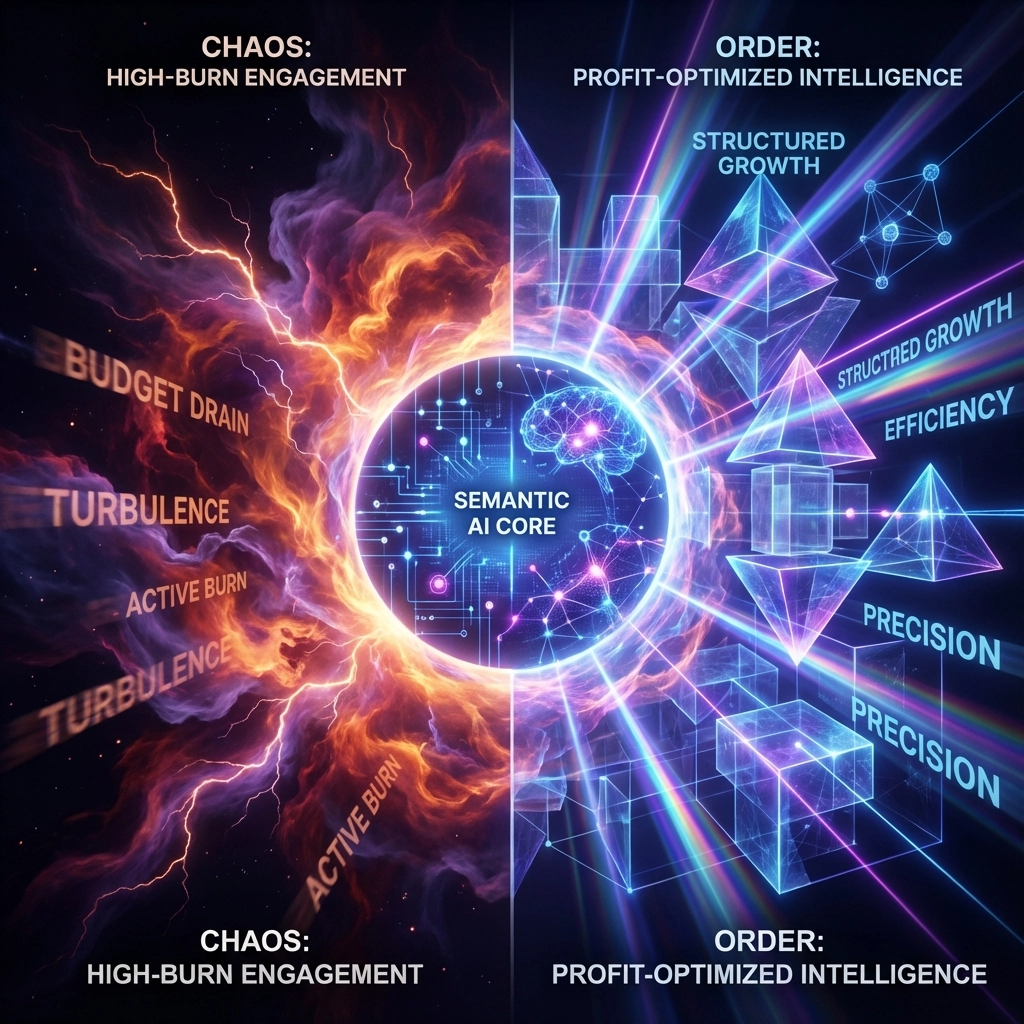
The feedback loop was vicious: automation platforms reward response rates, so they naturally gravitate toward customers who respond frequently. But frequent responders in e-commerce often need deeper discounts to convert. The system optimized itself into a margin death spiral.
Semantic AI: Understanding Intent, Not Just Behavior
Here's where semantic AI changes the physics entirely. Instead of reacting to behavioral triggers, it understands customer intent through data layering that goes beyond basic segmentation.
Let me show you what this looks like in practice. A client in the women's personal finance space was struggling with traditional automation. Their MoEngage flows could identify users who abandoned their investment onboarding, but they couldn't distinguish between someone who left because they were confused versus someone who left because they found a better rate elsewhere.
Semantic AI reads the context differently. It layers behavioral data with semantic understanding: session depth, content engagement patterns, support ticket sentiment, even the language patterns in their help desk interactions. The result? Campaigns that speak to actual customer needs instead of generic abandonment behaviors.
The client's retention team went from sending generic "come back" messages to delivering contextual guidance that addressed specific concerns. Conversion rates improved by 180%, but more importantly, the customers who came back stayed longer and engaged more meaningfully with the platform.
The Cohort-Level Intelligence Advantage
This is where traditional automation platforms hit their ceiling: they can't answer cohort-level questions that actually matter for profit optimization.
Marketing automation asks: "Who should get this campaign?"
Semantic AI asks: "What does this cohort actually need, and what's the margin-optimal way to deliver it?"

I've seen this difference play out repeatedly. Traditional platforms segment users into static buckets: "cart abandoners," "repeat purchasers," "high-value customers." But these categories miss the dynamic relationships between customer behavior, product margins, and lifecycle stage.
Semantic AI builds understanding through interconnected data layers. It knows that a customer who abandoned a high-margin product might respond differently than someone who abandoned a low-margin item. It understands that timing matters: a customer who's been browsing for three weeks requires different messaging than someone who just discovered your brand.
More crucially, it can predict which interventions will drive profitable behavior change versus which ones will simply accelerate inevitable churn.
Beyond Cart Abandoners: Real Segmentation Intelligence
Here's what keeps me up at night about traditional segmentation: it's treating symptoms, not causes.
"Cart abandoners" isn't a meaningful segment: it's a collection of completely different customer stories that happen to share one behavioral data point. The person who abandoned because of shipping costs has nothing in common with the person who abandoned because they couldn't find their size, who has nothing in common with the person who was just browsing for research.
Traditional automation treats these as the same problem. Semantic AI treats them as three different strategic opportunities.
I recently worked with a pet care brand where this distinction generated serious results. Their MoEngage flows were hitting standard industry benchmarks: 2.3% conversion on abandonment emails, 18% open rates, decent revenue attribution. But when we deployed semantic segmentation, we discovered their "cart abandoners" actually fell into seven distinct intent categories.
The real breakthrough came when we started optimizing campaigns for margin protection, not just conversion recovery. Customers abandoning high-margin premium food got educational content about nutrition benefits. Customers abandoning low-margin accessories got bundle offers that improved basket economics. Price-sensitive abandoners got transparent shipping cost breakdowns instead of blanket discounts.
Results: 47% improvement in margin per recovered cart, 23% reduction in discount dependency.
The Privacy-by-Design Intelligence Layer
Here's another mechanism traditional automation platforms can't replicate: privacy-intelligent segmentation.
Our privacy approach isn't just about compliance: it's about building customer trust while extracting better insights. When customers understand how their data creates better experiences, they share more meaningful information.
Semantic AI can work with privacy-preserved data layers to build understanding without requiring invasive tracking. It reads intent from consented interactions, builds profiles from explicitly shared preferences, and creates segmentation strategies that customers actually want to be part of.
I've watched this play out in healthcare and fintech pilots where privacy concerns initially seemed like they would limit campaign effectiveness. Instead, the opposite happened. When customers trusted the system, they engaged more authentically, which produced better data, which enabled more relevant campaigns.
The Strategic Implementation Reality
Let me be honest: this transition isn't plug-and-play simple. Most teams try to bolt semantic AI onto their existing automation stack and wonder why results feel incremental instead of transformational.
The breakthrough happens when you restructure campaign strategy around intelligence, not automation volume.
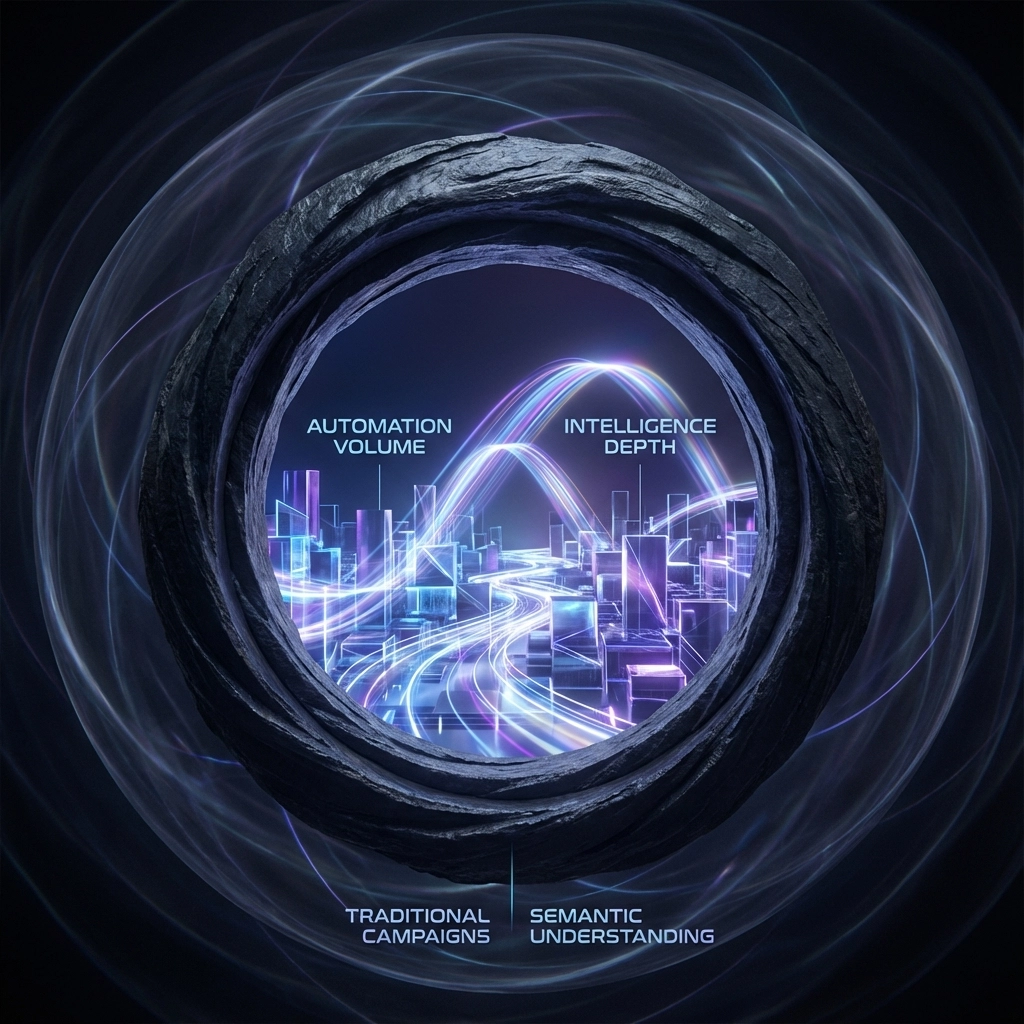
Instead of setting up more flows, you set up better questions. Instead of optimizing for email metrics, you optimize for customer lifetime economics. Instead of reacting to behavioral triggers, you anticipate customer needs through semantic understanding.
This requires different team skills and different success metrics. Marketing automation platforms train teams to think in terms of campaign performance. Semantic AI requires teams to think in terms of customer relationship development and margin optimization.
The learning curve is real, but the escape velocity is worth it.
Where Traditional Automation Fails at Scale
Here's the mechanism that breaks traditional automation at scale: complexity compounds faster than insight.
As your customer base grows, behavioral segmentation becomes exponentially more complex but not necessarily more intelligent. You end up with hundreds of micro-segments, dozens of overlapping flows, and campaign performance that becomes increasingly difficult to optimize.
Semantic AI scales differently. It compounds understanding instead of just adding complexity. Each customer interaction improves the intelligence layer for similar customers. The system gets smarter at predicting what interventions will drive profitable behavior change.
I've seen brands hit inflection points where their MoEngage setup required constant manual optimization to maintain performance, while their semantic AI implementation continued improving automatically through accumulated customer intelligence.
The Margin Protection Imperative
But here's the real reason semantic AI beats traditional automation: margin protection isn't an optimization goal for marketing automation platforms.
MoEngage and similar tools are designed to drive engagement and conversion. They're not built to understand or optimize for profit margins, customer acquisition costs, or lifetime value economics. They'll happily train your customers to expect deeper discounts if it improves campaign performance metrics.
Semantic AI can optimize for business outcomes that actually matter. It understands that converting a customer at 15% margin is fundamentally different from converting at 45% margin. It can balance short-term conversion goals with long-term customer value development.
This difference becomes exponentially important as customer acquisition costs continue rising and margin pressure intensifies across e-commerce, fintech, and subscription businesses.
The Strategic Choice Ahead
The market is moving toward intelligence-driven customer relationships. Traditional automation platforms will continue optimizing for engagement metrics because that's what they're built to do.
The question is whether you're building retention systems that optimize for the metrics that matter to your business, or just the metrics that are easy to measure.
Behavioral AI versus traditional segmentation isn't just a technology choice: it's a strategic choice about whether you're playing for engagement vanity metrics or building systematic competitive advantages through customer intelligence.
The brands that figure this out first aren't just going to win market share. They're going to redefine what profitable customer relationships look like in an increasingly noisy digital landscape.