
Are You Making These 7 Deadly Retention Mistakes That Kill Your Profit Margins?
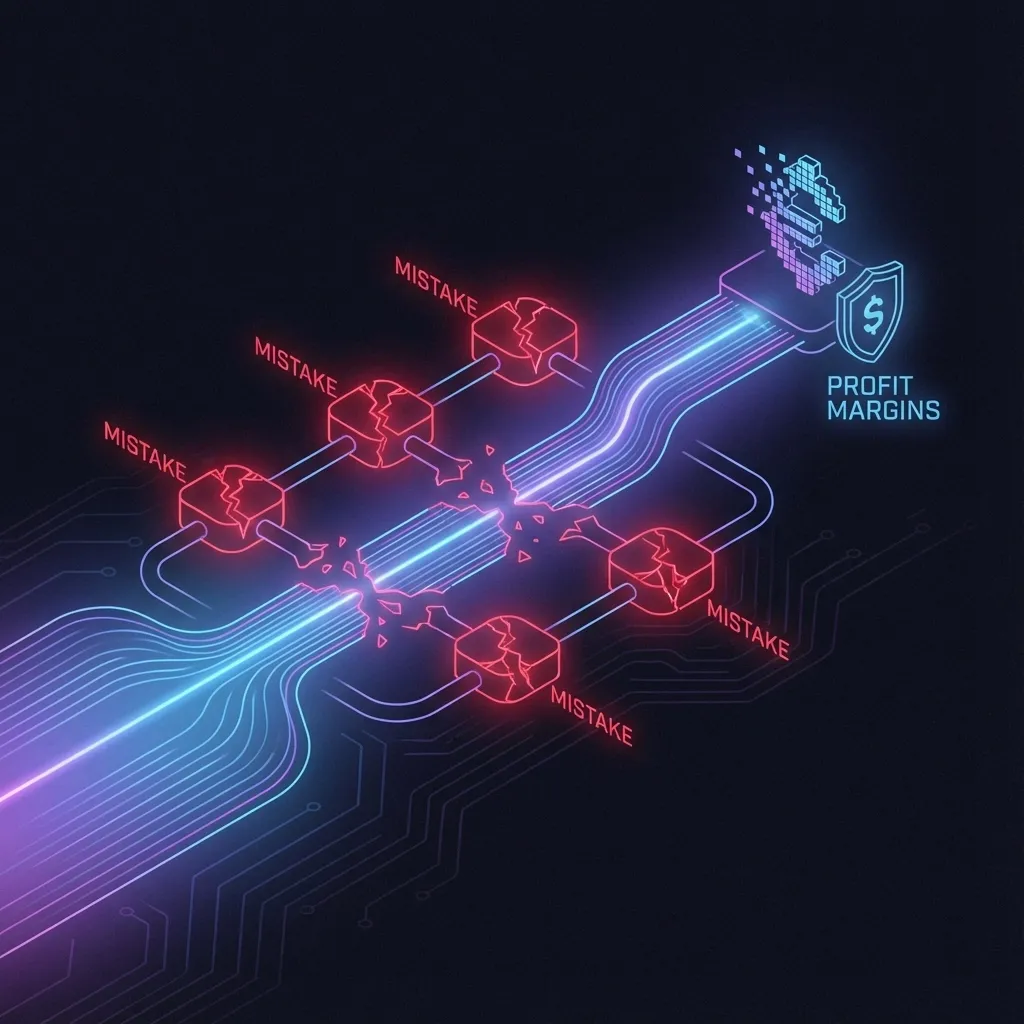
The retention crisis is costing businesses more than they realize. While companies obsess over acquisition metrics and customer lifetime value calculations, they're hemorrhaging profit through seven critical retention mistakes that systematically destroy their bottom line.
Consider this: acquiring a new customer costs 5-25x more than retaining an existing one, yet 89% of businesses still allocate the majority of their budget to acquisition rather than retention optimization. The result? Average customer retention rates across industries hover at a dismal 20%, leaving 80% of hard-won customers walking out the door: and taking their future revenue with them.
The mathematics are unforgiving. A company with $10M in annual revenue and a 20% retention rate must replace 80% of its customer base yearly just to maintain current performance. At an average customer acquisition cost of $200 and a lifetime value of $1,000, this company wastes $1.6M annually on unnecessary acquisition costs: money that should flow directly to profit margins.
Mistake #1: The Overpromise-Underdeliver Death Spiral
The most profitable companies understand a fundamental truth: misaligned expectations destroy retention faster than any competitor ever could. When sales teams overpromise to close deals, they're not just setting up customer disappointment: they're systematically destroying profit margins through accelerated churn.
Here's the financial reality: A customer acquired through overpromising typically churns within 6 months, compared to 24+ months for properly aligned customers. This means instead of generating $1,000 in lifetime value, these customers produce just $250 before leaving: a 75% reduction in profitability per customer.
The compounding effect is devastating. Overpromising creates negative word-of-mouth, requiring higher acquisition costs to overcome reputation damage. Companies trapped in this cycle often see customer acquisition costs increase 40-60% while retention rates plummet, creating an unsustainable business model.

Mistake #2: The Customer Service Resource Starvation
Customer service isn't a cost center: it's a profit protection mechanism. Yet 67% of businesses still treat customer support as an expense to minimize rather than an investment to optimize. This fundamental misunderstanding creates a retention catastrophe that directly attacks profit margins.
The data reveals the true cost of poor service: customers who experience poor support are 2.4x more likely to churn within 90 days. For a company with 1,000 customers and an average customer value of $5,000, poor service quality can trigger $600,000 in annual revenue loss through premature churn.
Even more damaging is the automation trap. While chatbots and automated systems reduce operational costs, over-automation creates customer frustration that destroys retention. Companies that eliminate human touchpoints see average satisfaction scores drop 34% and retention rates decline by 28%.
Mistake #3: The One-Size-Fits-All Profitability Killer
Personalization isn't a nice-to-have feature: it's a profit margin requirement. Businesses that fail to segment and personalize customer experiences leave massive amounts of money on the table through systematic underperformance across their entire customer base.
The personalization profit gap is substantial: companies with advanced personalization generate 1.7x higher retention rates and 2.3x higher average customer values compared to one-size-fits-all approaches. This translates to 40-60% higher profit margins per customer through extended relationships and increased purchase frequency.
Generic experiences create generic results. When customers receive the same treatment regardless of their value, engagement history, or specific needs, high-value customers feel undervalued while low-value customers receive excessive attention. This misallocation of resources systematically destroys profitability across the entire customer portfolio.
Mistake #4: The Short-Term Profit Maximization Trap
The most expensive retention mistake is viewing customers as replaceable profit opportunities. This short-term thinking creates a retention death spiral that compounds over time, systematically destroying the business model through unsustainable customer economics.
The replacement mentality carries hidden costs: when businesses prioritize immediate profit extraction over long-term relationship building, they trigger premature churn that requires constant replacement spending. A company that loses 50% of customers annually due to profit-maximizing behavior must spend 2.5x more on acquisition than competitors with 80% retention rates.
The compounding effect is devastating. Short-term profit maximization reduces customer lifetime value, increases acquisition dependency, and creates negative word-of-mouth that raises future acquisition costs. Companies trapped in this cycle often see profit margins compress 30-50% over 2-3 years despite revenue growth.
Mistake #5: The Loyalty Program Underutilization Crisis
Loyalty programs aren't marketing gimmicks: they're retention insurance policies. Yet 73% of businesses either lack comprehensive loyalty programs or significantly underutilize their retention potential, leaving money on the table through preventable customer defection.
The loyalty program profit multiplier is substantial: customers enrolled in well-designed loyalty programs demonstrate 67% higher retention rates and 23% higher average purchase values compared to non-enrolled customers. For a business with 5,000 customers, implementing effective loyalty programs can increase annual profit margins by $500,000-$750,000.
The most profitable companies understand that loyalty programs create switching costs, increase engagement frequency, and provide valuable customer data for personalization. Businesses that treat loyalty programs as afterthoughts miss these compounding benefits and systematically underperform in retention metrics.

Mistake #6: The Customer Journey Fragmentation Problem
Holistic customer journey management isn't operational complexity: it's profit margin protection. Businesses that manage customer interactions in silos rather than as connected experiences create friction points that systematically destroy retention and profitability.
The fragmentation cost is measurable: customers who experience consistent, connected journeys demonstrate 89% higher retention rates and require 43% fewer support interactions compared to customers experiencing fragmented journeys. This consistency directly translates to higher profit margins through reduced service costs and extended customer relationships.
Journey fragmentation creates customer frustration, increases support costs, and reduces cross-selling opportunities. Companies that fail to connect touchpoints across departments miss upselling opportunities worth 15-25% of total customer lifetime value.
Mistake #7: The Customer Intelligence Deficit
Customer understanding isn't data analysis: it's profit margin optimization. The most costly retention mistake is operating without comprehensive customer intelligence, making decisions based on assumptions rather than behavioral data.
The intelligence gap carries massive opportunity costs: companies with advanced customer analytics achieve 23% higher retention rates and 19% higher profit margins compared to businesses operating on limited customer insights. This intelligence gap represents millions in lost profit potential for most businesses.
Without comprehensive customer intelligence, businesses cannot predict churn risk, optimize intervention timing, or personalize retention efforts. This blind approach to customer management creates systematic underperformance across all retention metrics.

The Compound Profit Impact
These seven mistakes don't operate in isolation: they compound exponentially. A business making 3-4 of these mistakes simultaneously can see retention rates drop below 15% and profit margins compress by 40-60%. The financial mathematics become unsustainable quickly.
The retention-profit connection is direct: improving retention by just 5% can increase profit margins by 25-95% depending on industry and business model. This improvement comes from reduced acquisition costs, increased lifetime value, and enhanced word-of-mouth marketing that reduces future acquisition expenses.
The strategic imperative is clear: businesses must systematically audit their retention practices, identify these seven deadly mistakes, and implement comprehensive correction strategies. The companies that move first will capture disproportionate market share as competitors struggle with unsustainable customer economics.
The choice is binary: fix these retention mistakes now and protect profit margins, or watch competitors systematically capture market share through superior customer retention economics. The window for action is closing: and the cost of inaction compounds daily.