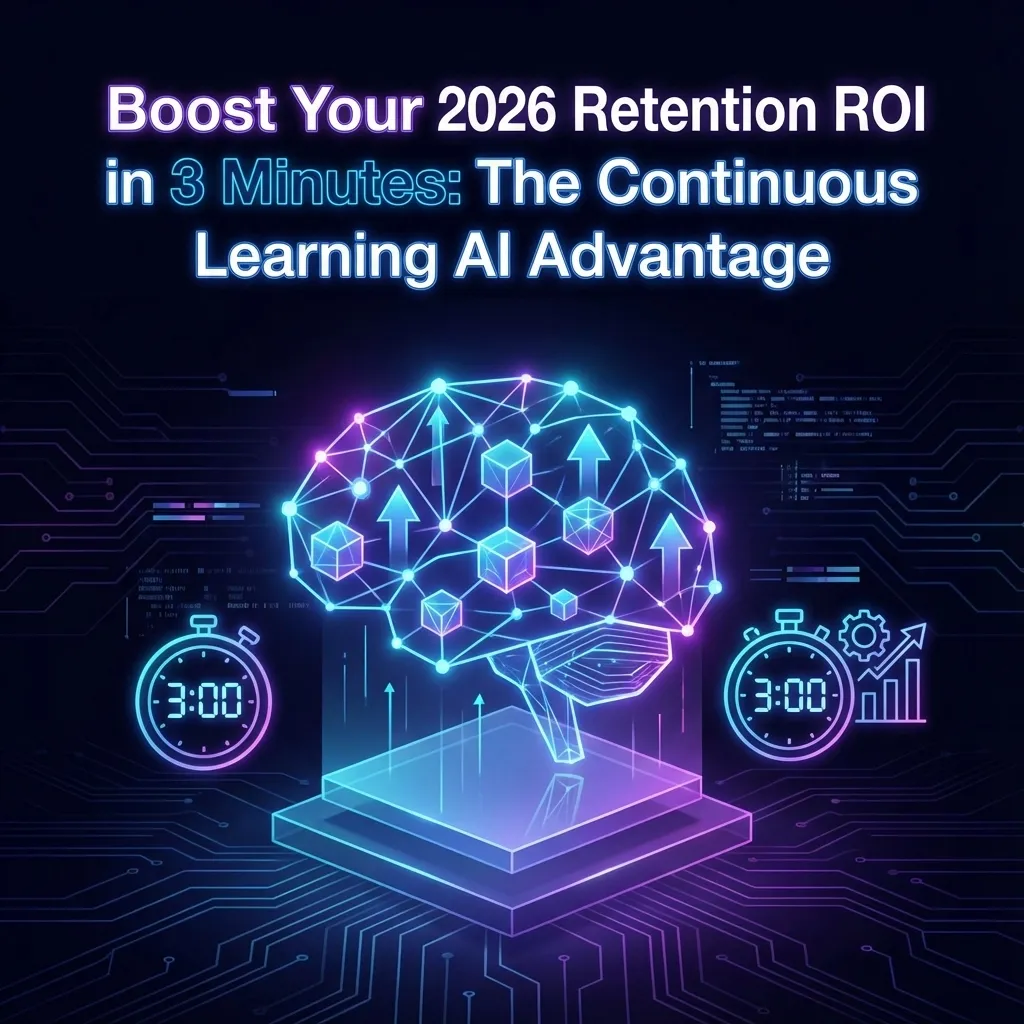
Boost Your 2026 Retention ROI in 3 Minutes: The Continuous Learning AI Advantage
The retention landscape is shifting dramatically. While 73% of businesses report customer acquisition costs rising by 60% over the past five years, companies with intelligent retention systems are seeing 3x higher profit margins than those stuck with traditional approaches. The difference? Continuous learning AI that adapts to customer behavior in real-time, not quarterly reviews that react to problems months too late.
The math is stark: increasing customer retention rates by just 5% can boost profits by 25-95%. Yet most businesses are still using static segmentation models built on last year's data to predict next quarter's behavior. That's like driving while looking in the rearview mirror: and wondering why you keep hitting obstacles.
The $47 Billion Problem Traditional Retention Can't Solve
Customer behavior has become unpredictable. The average e-commerce customer now interacts with your brand across 7.3 touchpoints before making a purchase decision, generating over 2.5 quintillion bytes of behavioral data daily. Traditional retention systems process this information once a month, if at all.
The cost of this delay is devastating:
- Cart abandonment rates have reached 84.3% industry-wide
- Customer lifetime value predictions are off by an average of 43%
- Retention campaigns show diminishing returns, with email open rates dropping to 18.7%
- Over-discounting has become the default response, eroding margins by 23% annually
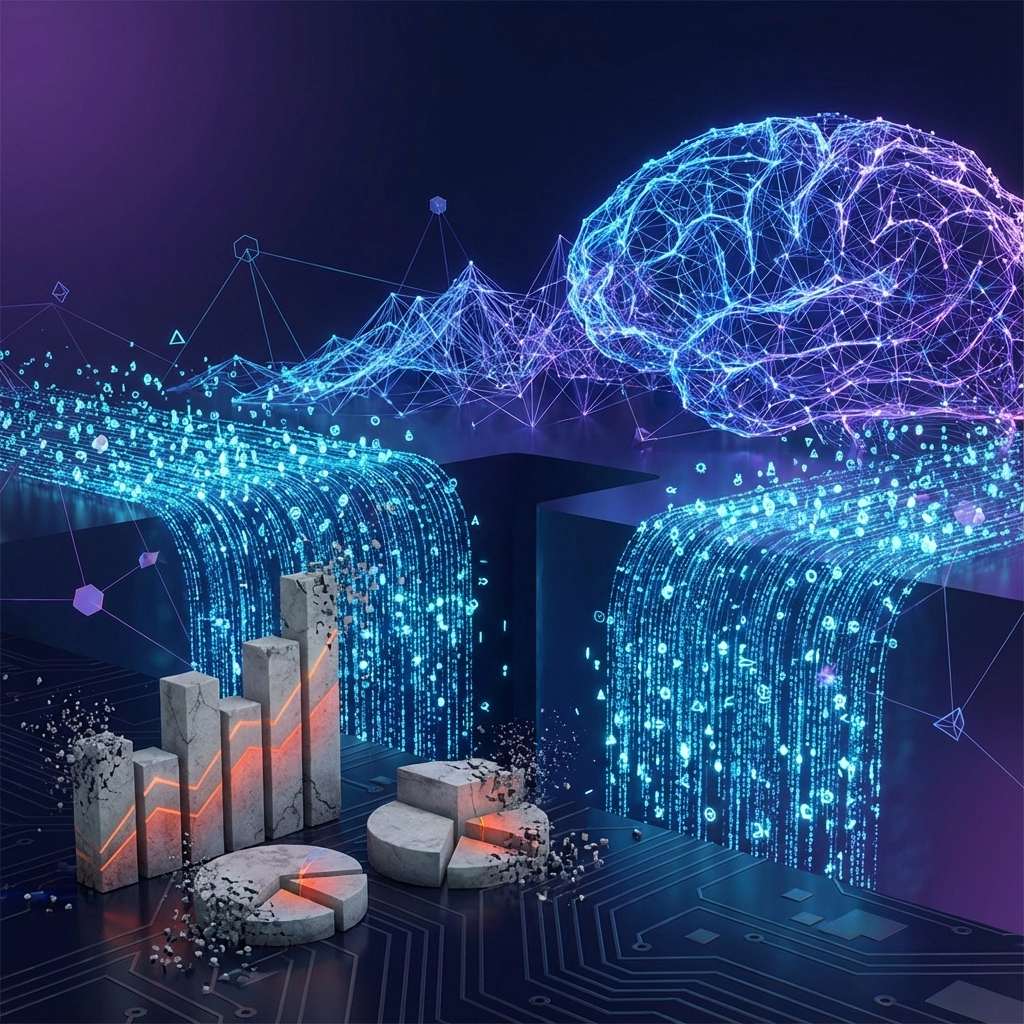
Businesses are hemorrhaging profit because their retention systems learn too slowly. By the time you identify a customer at risk, they've already started shopping with your competitors. By the time you segment customers for a new campaign, their preferences have evolved three times over.
Continuous Learning AI: The 2026 Competitive Advantage
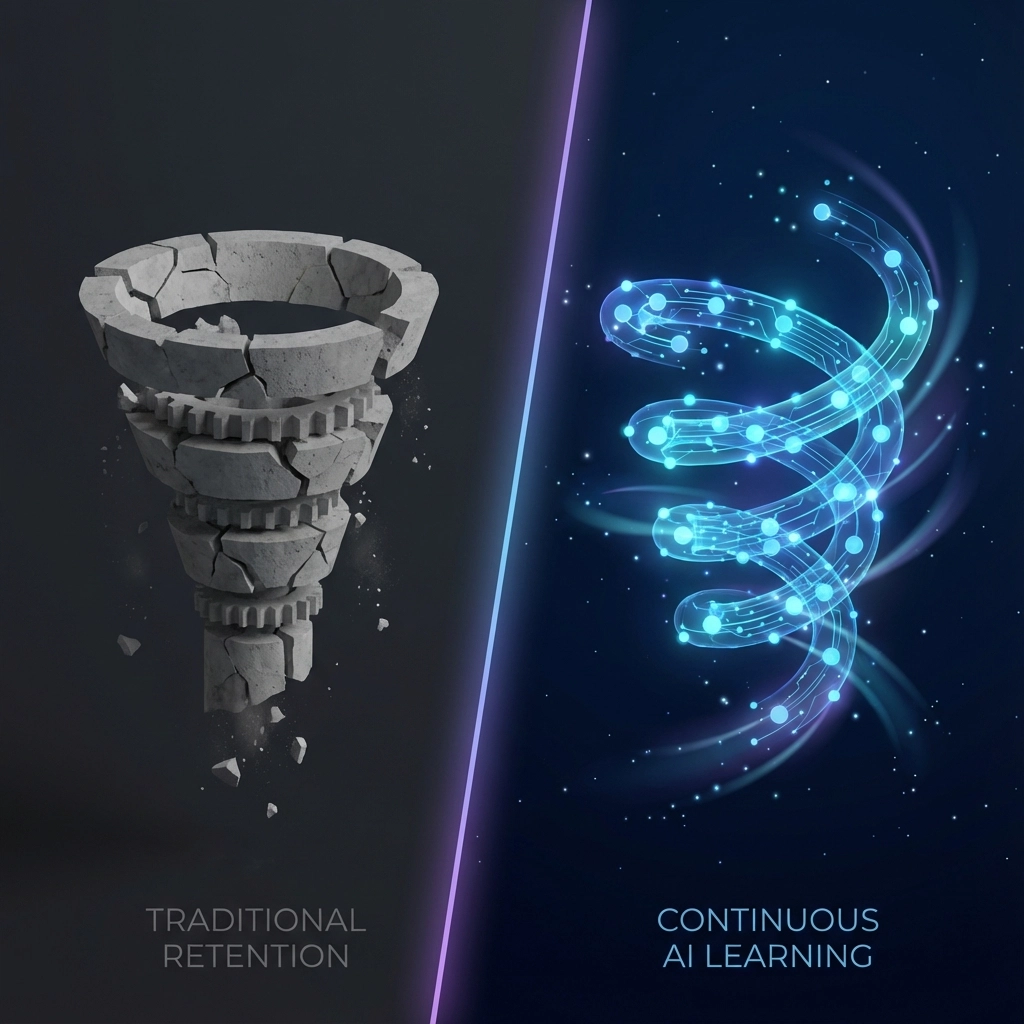
Continuous learning AI doesn't just analyze customer data: it evolves with it. Unlike traditional machine learning models that require periodic retraining, continuous learning systems update their understanding of customer behavior in real-time, processing micro-signals and behavioral patterns as they emerge.
The transformation is immediate and measurable:
- Real-time risk detection identifies churn signals 67% faster than traditional methods
- Dynamic segmentation creates personalized customer journeys that adapt to behavior changes within hours
- Predictive opportunity mapping surfaces upsell and cross-sell moments with 89% accuracy
- Margin-aware recommendations optimize for profitability, not just engagement
Companies implementing continuous learning AI are reporting retention ROI improvements of 340% within the first six months. The reason is simple: when your retention system learns as fast as your customers change, you stay ahead of their needs instead of reacting to their departures.
The Three-Pillar Framework for 2026 Success
Pillar 1: Behavioral Pattern Recognition at Scale
Traditional segmentation creates static customer buckets: "High-value customers," "Price-sensitive buyers," "Frequent purchasers." Continuous learning AI identifies behavioral patterns that transcend these categories.
Example: A customer classified as "price-sensitive" might actually be value-optimizing: willing to pay premium prices for products that solve specific problems at particular times. Continuous learning AI detects these nuanced patterns by analyzing:
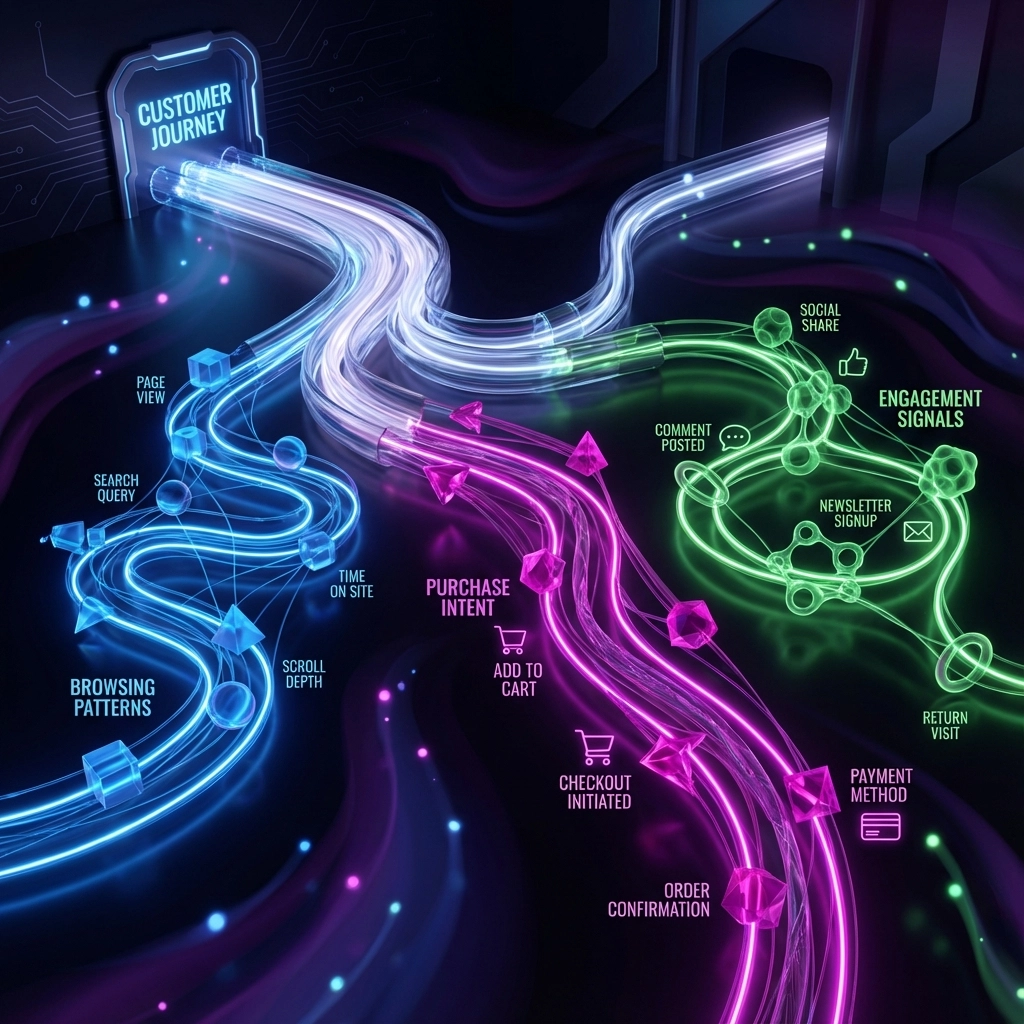
- Micro-interactions: Time spent on product pages, scroll patterns, feature engagement
- Contextual triggers: Purchase timing relative to life events, seasonal patterns, competitor activity
- Cross-channel behavior: How social media engagement correlates with purchase intent
This granular understanding enables retention strategies that feel personal rather than algorithmic. Instead of sending generic "We miss you" emails, you're delivering exactly what each customer needs, when they need it.
Pillar 2: Real-Time Opportunity Detection
The average customer shows purchase intent signals 11.3 times before converting. Traditional systems catch maybe 2-3 of these signals. Continuous learning AI captures and responds to all of them.
The competitive impact is dramatic:
- Immediate intervention for cart abandonment increases recovery rates by 156%
- Proactive retention for at-risk customers reduces churn by 41%
- Opportunity amplification identifies upsell moments that traditional systems miss entirely
Consider this scenario: A customer browses your premium product line for the third time in two weeks but only purchases basic items. Traditional systems see a "low-value customer." Continuous learning AI recognizes an aspiration gap: this customer wants premium products but needs the right trigger to justify the purchase.
The AI might surface a targeted campaign around "investment in quality" or "upgrade timing," resulting in conversions that static segmentation would never capture.
Pillar 3: Margin-Aware Profit Optimization
The dirty secret of customer retention: most retention campaigns destroy profitability. Discounting has become so automatic that businesses are training customers to wait for sales before purchasing.
Continuous learning AI breaks this cycle by understanding profit-optimal retention strategies for each customer segment:
- Value-based customers respond to exclusive access and premium experiences
- Convenience-seekers convert through frictionless reordering and predictive shipping
- Discovery-oriented customers engage with personalized product recommendations and early access
The system learns which retention levers drive long-term value versus short-term sales, automatically optimizing for profit margins rather than just conversion rates.
Implementation: The 90-Day ROI Blueprint
Days 1-30: Foundation and Integration
Deploy continuous learning infrastructure and integrate with existing customer data streams. The key is starting with high-impact, low-complexity use cases:
- Real-time cart abandonment recovery
- Dynamic email send-time optimization
- Basic behavioral trigger identification
Days 31-60: Pattern Recognition and Personalization
Expand into sophisticated behavioral analysis and begin personalizing customer journeys:
- Implement micro-segmentation based on behavioral patterns
- Deploy predictive churn models with real-time updates
- Launch margin-aware retention campaigns
Days 61-90: Advanced Optimization and Scaling
Activate full continuous learning capabilities across all customer touchpoints:
- Cross-channel behavioral correlation
- Predictive lifetime value modeling
- Automated A/B testing for retention strategies
Most businesses see positive ROI by day 45 and full implementation benefits by day 90.
The 2026 Reality: Adapt or Fall Behind
Customer expectations aren't slowing down. By 2026, the average customer will expect brands to remember and respond to their preferences across every interaction, in real-time, without friction or delay.
Businesses still running quarterly retention reviews and annual segmentation updates will find themselves competing with companies that adapt to customer needs instantly. The gap will be impossible to bridge with traditional methods.
The choice is clear: Implement continuous learning AI now and gain a sustainable competitive advantage, or spend 2026 watching more agile competitors capture your customers.
The technology exists today. The ROI is proven. The only question is whether you'll lead the retention revolution or follow from behind.
Keywords: continuous learning ai, retention optimization, customer retention strategies, ai behavioral analysis, profit optimization, 2026