
Real-Time Opportunity Detection: The Secret Best Brands Use to Cut Churn by 40%

The retention crisis is hitting harder than ever. While traditional brands scramble to patch leaky customer buckets after the damage is done, the world's most successful companies have discovered a game-changing approach: real-time opportunity detection. This isn't another analytics buzzword: it's the proven framework that transforms reactive customer management into proactive revenue protection.
The difference between brands that thrive and those that barely survive comes down to timing. When you can identify churn risk in real-time and act on upsell opportunities the moment they emerge, you're not just preventing losses: you're accelerating growth at unprecedented speed.
The $2.6 Million Problem Every Business Faces
Customer acquisition costs have increased by 222% over the past eight years. Meanwhile, the average churn rate across industries hovers between 15-25% annually. For a company with $10M in recurring revenue, that represents $2.6M walking out the door every year: money that traditional analytics approaches fail to protect because they're always looking backward.
Traditional customer analytics operate like autopsy reports: detailed, accurate, but arriving far too late to save the patient. By the time quarterly business reviews reveal declining engagement scores or usage metrics, customers have already made their decision to leave.
Real-time opportunity detection flips this equation. Instead of analyzing what happened, it predicts what's about to happen and creates windows for immediate intervention.

The Three Pillars of Real-Time Opportunity Detection
Immediacy forms the foundation: data processing occurs within seconds or minutes of customer activity, not days or weeks. When a customer's support ticket language shifts from neutral to frustrated, when usage patterns change, or when key stakeholders go silent, you know instantly.
Actionability ensures every insight triggers immediate response capabilities. Alerts connect directly to customer success workflows, sales engagement platforms, and support ticketing systems. No insight sits in a dashboard waiting for someone to discover it during their next review cycle.
Contextual Awareness provides the critical "why" behind every signal. AI-powered analysis combines behavioral data, communication sentiment, product usage patterns, and historical context to deliver actionable intelligence that human teams can act on with confidence.
How Best Brands Cut Churn by 40%
The magic happens in the moments between customer thinking and customer acting. Traditional approaches miss this window entirely. Real-time opportunity detection captures these critical micro-moments and converts them into retention wins.
Consider this scenario: A customer emails support asking about multi-user access functionality. Traditional analytics might flag this interaction during the next monthly review as "feature interest." Real-time detection identifies this immediately as an expansion opportunity, triggers an instant alert to the account manager, and provides conversation context that enables a same-day upgrade proposal.
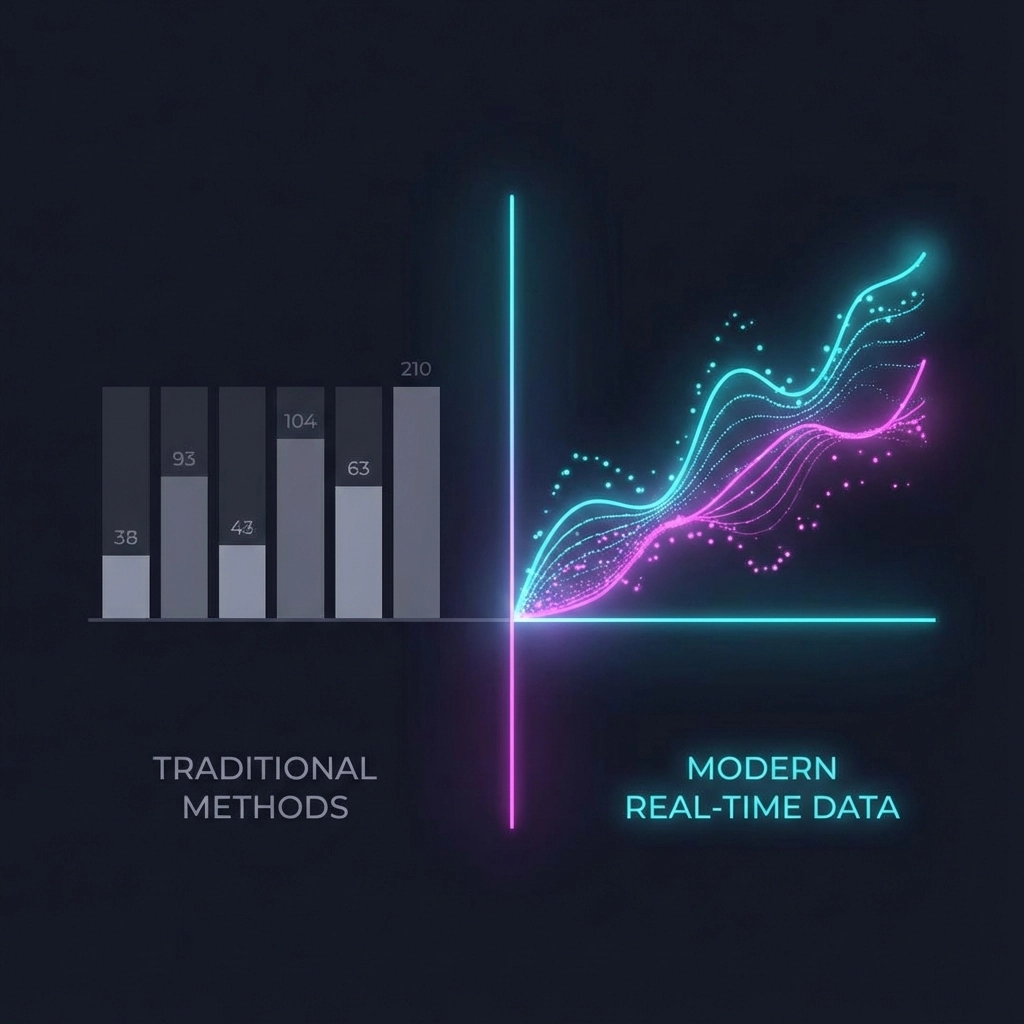
The compound effect is staggering. When teams can intervene during sentiment shifts rather than after relationship breakdown, when they can address usage concerns before frustration peaks, and when they can capitalize on positive moments instead of letting them pass unnoticed, retention rates improve dramatically.
Leading brands report 40% reductions in churn because they've eliminated the lag time between customer signal and company response. They're not just retaining more customers: they're expanding relationships faster and more frequently.
The Cross-Department Revenue Engine
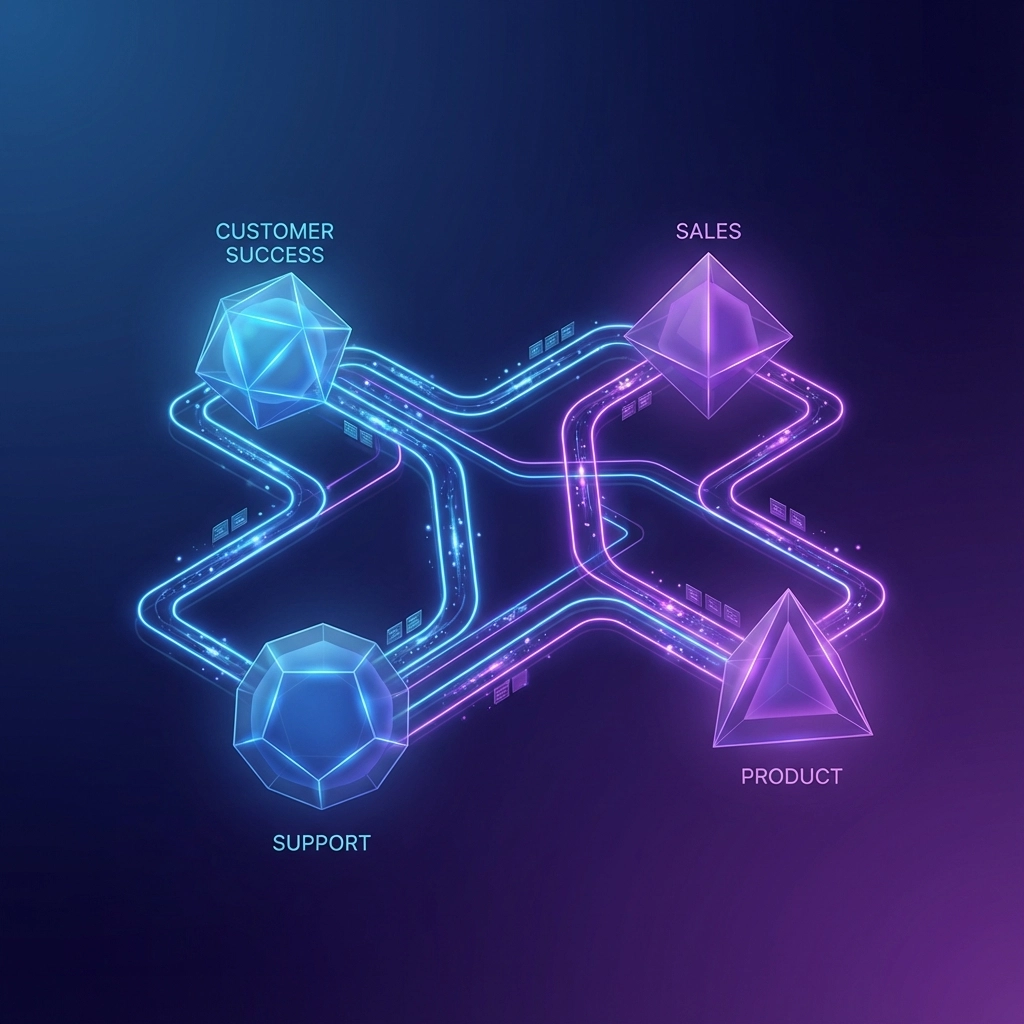
Real-time opportunity detection transforms every customer-facing team into a revenue generator:
Customer Success teams receive instant alerts when sentiment analysis detects frustration in support tickets, when key stakeholders haven't logged in recently, or when usage patterns suggest adoption challenges. Instead of discovering problems during quarterly business reviews, they're having proactive conversations within hours of signal detection.
Sales teams get immediate notifications when existing customers mention competitors, ask about additional features, or show expansion signals in their product usage. The window between customer interest and sales conversation shrinks from weeks to hours.
Support teams shift from reactive problem-solving to proactive issue prevention. When AI detects multiple customers experiencing similar friction points, support can address root causes before ticket volumes spike.
Product teams receive real-time feedback about feature adoption, usage patterns, and customer pain points, enabling rapid iteration and development prioritization based on actual customer behavior rather than quarterly surveys.
The Implementation Framework That Delivers Results
Phase One: Signal Identification
Implement AI-powered analysis across all customer communication channels: support tickets, product usage data, email interactions, and in-app behavior. Modern platforms process this information continuously, identifying patterns that indicate risk, opportunity, or changing needs.
Phase Two: Alert Optimization
Configure intelligent alerting that connects insights directly to action workflows. Critical signals route immediately to appropriate team members through their preferred communication channels: Slack, email, or CRM notifications: with full context and suggested next steps.
Phase Three: Response Automation
Build response templates and workflows that enable immediate action. When expansion opportunities surface, sales teams receive prospect context, conversation starters, and relevant product information. When churn risks emerge, customer success teams get relationship history, usage analytics, and intervention strategies.
Phase Four: Continuous Learning
Establish feedback loops that improve signal accuracy over time. As teams act on insights, they provide outcome data that trains the system to identify higher-quality opportunities and reduce false positives.
Real-World Revenue Impact
A SaaS company with $50M ARR implemented real-time opportunity detection and achieved remarkable results within six months:
- Churn reduction: 38% decrease in customer loss
- Expansion acceleration: 156% increase in upsell conversion rates
- Response time improvement: From 3.2 days average to 47 minutes
- Revenue protection: $4.8M in retained recurring revenue
- Additional growth: $2.1M in expansion revenue from faster opportunity capture
The key was eliminating the delay between customer signal and company response. When customers feel heard and supported in real-time, loyalty strengthens dramatically. When expansion conversations happen during moments of high engagement rather than during formal renewal discussions, conversion rates skyrocket.

The Technology Stack That Powers Success
Modern real-time detection requires integrated platforms that combine data collection, AI analysis, and workflow automation. Customer data platforms like Segment or mParticle provide the data foundation. AI analysis engines process communication sentiment, usage patterns, and behavioral signals. Workflow automation tools like Zapier or custom integrations ensure insights trigger immediate actions across sales, success, and support teams.
The investment typically pays for itself within 90 days through retained customers and accelerated expansion revenue. Companies that delay implementation face increasing competitive disadvantage as customer expectations for immediate, personalized responses continue rising.
Your Next Move
The question isn't whether real-time opportunity detection works: it's whether you can afford to wait while competitors capture the advantages. Every day without real-time insights represents missed opportunities and preventable churn.
Start by auditing your current customer intelligence capabilities. Identify the gaps between customer signals and team responses. Then implement the technology and processes that transform your customer relationships from reactive maintenance into proactive revenue growth.
The best brands aren't just cutting churn by 40%; they're building sustainable competitive advantages through superior customer intelligence. The time to act is now.