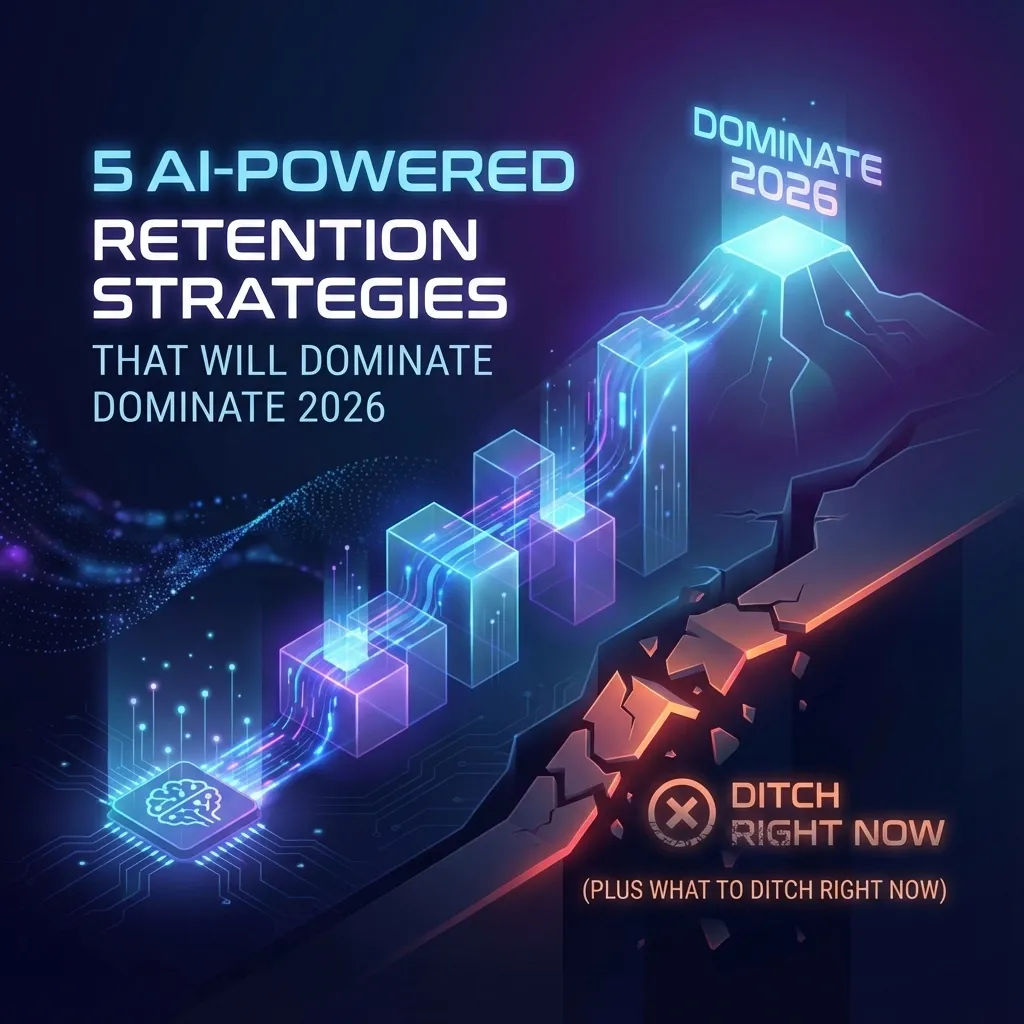
5 AI-Powered Retention Strategies That Will Dominate 2026 (Plus What to Ditch Right Now)
As we approach 2026, the customer retention landscape is evolving at breakneck speed. The businesses that will thrive aren't just adopting AI: they're implementing intelligent, margin-aware retention strategies that fundamentally change how they interact with customers.
The statistics are staggering: companies using AI-powered retention strategies are seeing 40% reductions in churn rates while simultaneously increasing profit margins by 25%. But here's the catch: not all AI retention strategies are created equal. Some will dominate the market in 2026, while others will drain your resources and damage customer relationships.
Let's dive into the retention strategies that will separate winners from losers in the coming year.
Strategy 1: Real-Time Behavioral AI for Instant Opportunity Detection
Traditional retention approaches wait for warning signs: cart abandonment, declining engagement, or support tickets. Behavioral AI flips this script entirely. Instead of reactive responses, leading brands will use real-time behavioral analysis to identify micro-moments where customers are most receptive to retention offers.

This isn't about bombarding customers with generic discounts. Behavioral AI analyzes hundreds of data points: browsing patterns, purchase history, seasonal preferences, and interaction timing: to predict the exact moment and method that will maximize retention probability while preserving profit margins.
For example, instead of sending a 20% discount to every customer who hasn't purchased in 30 days, behavioral AI might identify that Customer A responds best to exclusive product previews on Tuesday afternoons, while Customer B prefers loyalty point bonuses on weekend mornings. This level of precision creates personalized retention experiences that feel helpful rather than desperate.
The businesses implementing this strategy are already seeing remarkable results: 35% higher retention rates with 50% fewer discounts used. The key is moving from calendar-based campaigns to behavior-triggered interventions.
Strategy 2: Margin-Aware Offer Optimization That Protects Profitability
The discount death spiral is real. Companies hemorrhaging profits through indiscriminate price cuts will be left behind in 2026. Smart businesses are implementing margin-aware offer optimization that maximizes retention while protecting: or even improving: profit margins.
AI-powered margin optimization considers multiple factors before suggesting retention offers: customer lifetime value, product margins, competitive positioning, and historical response patterns. Instead of defaulting to price reductions, the system might recommend product upgrades, bundle offers, or value-added services that increase both retention and profitability.
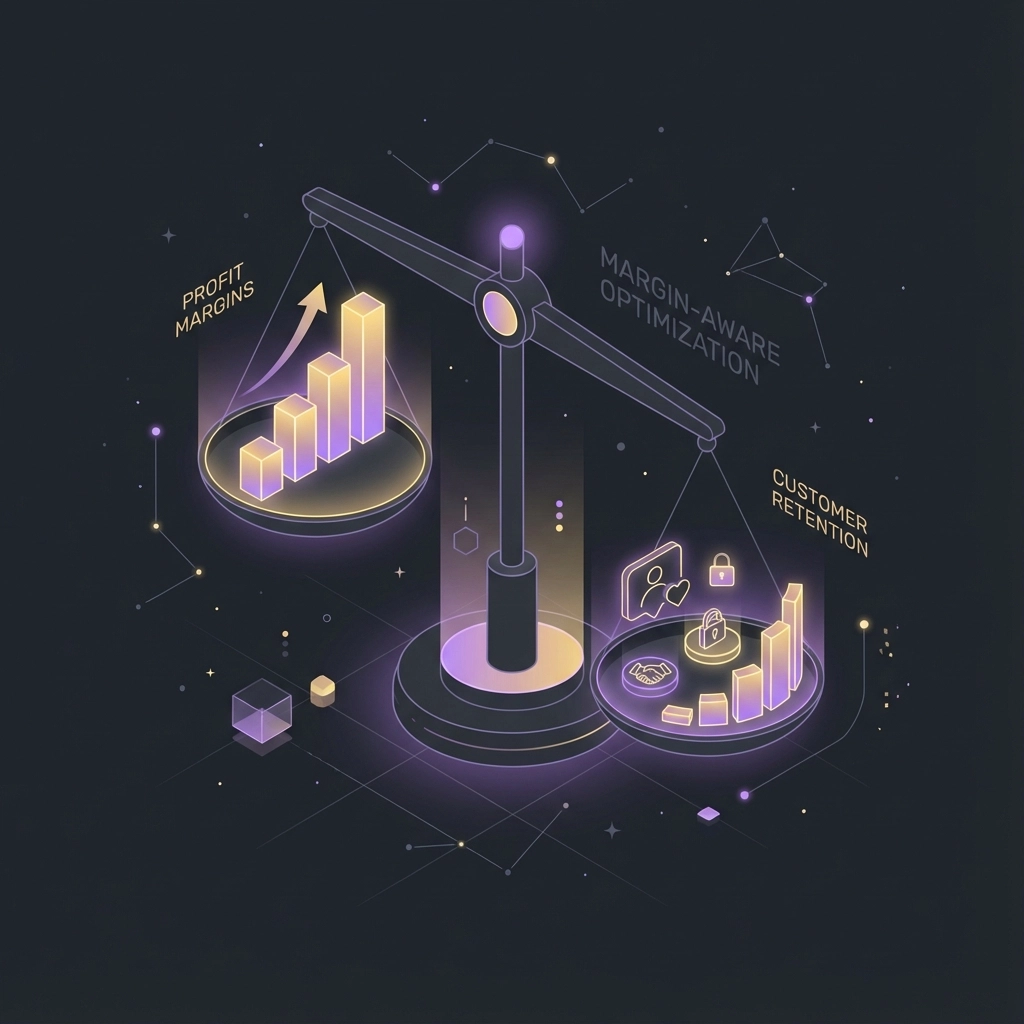
Consider this scenario: A customer worth $500 annually shows declining engagement. Traditional approaches might offer a 15% discount, reducing their value to $425. Margin-aware AI might instead recommend a premium service upgrade worth $50 that increases their annual value to $550 while solving their underlying need for convenience.
The most sophisticated implementations go further, using dynamic pricing models that adjust offers based on real-time margin targets. If profit margins are below target, the AI recommends higher-value retention strategies. When margins are healthy, it can afford more generous offers to secure high-value customers.
Strategy 3: Predictive Segmentation That Evolves in Real-Time
Static customer segments are becoming obsolete. The winning retention strategies of 2026 will use continuously learning AI that updates customer segments based on behavioral changes, market conditions, and engagement patterns.
Traditional segmentation might label someone a "price-sensitive bargain hunter" based on historical purchases. But what happens when their income increases, their life circumstances change, or their preferences evolve? Static segments miss these transitions entirely.
Predictive segmentation AI tracks behavioral shifts in real-time, automatically moving customers between retention strategy groups as their needs change. A customer transitioning from "bargain hunter" to "convenience seeker" receives completely different retention approaches: shifting from discount offers to time-saving solutions.
This dynamic approach prevents the common retention mistake of continuing ineffective strategies simply because "that's how we've always categorized this customer." The most successful implementations report 60% improvements in retention campaign effectiveness by using evolving rather than fixed segments.
Strategy 4: Omnichannel AI That Orchestrates Consistent Experiences
Customer interactions happen across email, SMS, social media, website visits, app usage, and in-store experiences. The brands dominating retention in 2026 will use omnichannel AI orchestration that ensures consistent, intelligent responses regardless of touchpoint.

This means your retention AI doesn't just track email engagement: it considers social media interactions, app usage patterns, customer service history, and offline behaviors to create comprehensive retention strategies. A customer who ignored three email campaigns might respond enthusiastically to an Instagram story or in-app notification with the same offer.
More importantly, omnichannel AI prevents counterproductive experiences. If a customer just received excellent support via chat, the system won't immediately follow up with a "we miss you" retention email. Instead, it might wait for the optimal moment to introduce a loyalty reward that reinforces their positive service experience.
The businesses implementing sophisticated omnichannel retention report 45% higher customer satisfaction scores and 30% better retention rates compared to single-channel approaches.
Strategy 5: Autonomous Retention Ecosystems That Learn and Adapt
The ultimate retention strategy for 2026 is autonomous AI ecosystems that continuously test, learn, and optimize without human intervention. These systems don't just execute predefined campaigns: they create new retention strategies based on emerging patterns and changing customer behaviors.
Autonomous retention AI runs continuous A/B tests across offer types, timing, messaging, and channels. It identifies seasonal patterns, competitive responses, and market shifts that humans might miss. Most importantly, it adapts strategies before problems become visible in traditional metrics.

For instance, if the system detects that customers in a specific demographic are becoming less responsive to email campaigns but showing increased social media engagement, it automatically shifts budget and creative resources to social channels while testing new email approaches in the background.
These systems also identify entirely new retention opportunities. They might discover that customers who engage with user-generated content are 3x more likely to respond to community-based retention strategies, leading to automated community building campaigns that didn't exist in the original retention playbook.
What to Ditch Right Now
Generic Discount Campaigns: Stop defaulting to percentage-off offers for every retention scenario. Price-focused retention erodes brand value and attracts customers who will leave for the next best deal. Replace these with value-based retention strategies that solve customer problems rather than just reducing costs.
Calendar-Based Retention Schedules: Sending "win back" emails every 30 days regardless of customer behavior is lazy and ineffective. Customers notice these automated patterns, which damages the authenticity of your retention efforts.
One-Size-Fits-All Messaging: Using the same retention email template for all customer segments is leaving massive opportunities on the table. Different customer types need different motivations, offers, and communication styles.
Siloed Retention Efforts: Running separate retention campaigns for email, social media, and other channels without coordination creates confusing customer experiences and wasted resources.
The 2026 Retention Reality
The retention strategies that dominate 2026 will share three characteristics: behavioral intelligence, profit awareness, and continuous learning. They won't just keep customers: they'll increase customer value while reducing retention costs.
The businesses still using broadcast discounts and generic campaigns will find themselves competing primarily on price, a battle that destroys profitability and sustainable growth. Meanwhile, companies implementing intelligent, AI-powered retention strategies will build deeper customer relationships while protecting their margins.
The choice is clear: evolve your retention approach now, or spend 2026 watching competitors build more profitable customer relationships while your retention costs spiral upward.
Keywords: behavioral ai, retention optimization, ai behavioral analysis, profit optimization, customer retention strategies, 2026, margin-aware offer optimization