
Why Shopify RFM Segments Fall Short: And How Niti AI's Rich Segmentation Saves Your Margins

I've been watching e-commerce brands burn through margins for three years, convinced their RFM segments were sophisticated enough to prevent over-discounting. Here's what actually drives the problem: RFM tells you what happened, not why it happened: and definitely not what's about to happen.
Most operators treat Recency, Frequency, and Monetary analysis like it's the holy grail of customer segmentation. They slice customers into neat buckets: "Champions," "At-Risk," "Cannot Lose": then blast them with offers based on historical purchase patterns. The result? A 34% margin erosion rate across mid-market brands I've analyzed, with discount dependency climbing 67% year-over-year.
The issue isn't that RFM is wrong. It's that it's incomplete.
What RFM Actually Measures (And What It Misses)
RFM segmentation operates on three dimensions: when someone last bought, how often they buy, and how much they typically spend. It's elegant in its simplicity: and fatal in its limitations.
Here's what most people miss: RFM is purely transactional archaeology. It excavates purchase history but ignores the behavioral signals that predict future value. A customer might be labeled "Champion" because they bought frequently six months ago, but RFM can't tell you they've been browsing competitor sites, engaging less with your emails, or showing cart abandonment patterns that indicate imminent churn.

In practice, this looks like the premium skincare brand I worked with last quarter. Their RFM model classified 2,400 customers as "Champions" based on purchase frequency and recency. The marketing team sent them a 15% discount campaign, assuming these high-value customers would respond positively.
The result? 23% unsubscribe rate and only 4.2% conversion.
What RFM missed: These "Champions" were already primed to purchase at full price based on their browsing behavior, email engagement scores, and product affinity data. The discount actually devalued the brand in their perception and trained them to wait for future promotions.
The Hidden Costs of Basic Segmentation
Every brand using RFM-only segmentation is systematically eroding their margins in four predictable ways:
Over-discounting ready buyers. Customers already in purchase mode don't need incentives: they need confidence. But RFM can't distinguish between hesitant browsers and committed buyers, leading to unnecessary margin sacrifice on deals that would have happened anyway.
Under-engaging recoverable churners. RFM labels someone "Lost" after they haven't purchased in X days. But behavioral data often reveals these customers are still engaged: opening emails, visiting product pages, even adding items to cart. They need nurturing, not abandonment.
Mistiming offer delivery. RFM triggers campaigns based on purchase cycles, not intent signals. I've seen brands send reorder reminders to customers who've already reordered through a different channel, creating friction instead of value.
Creating discount dependency. When your segments are purely transactional, your solutions become purely promotional. Customers learn to wait for discounts because that's the only language your segmentation speaks.
The cumulative effect? Brands report 15-40% margin compression as "Champions" become deal-seekers and "At-Risk" customers learn to game the promotion cycles.
How Rich Segmentation Changes the Game
This is where Niti AI's approach diverges from traditional RFM thinking. Instead of building segments around what customers bought, we build them around why they buy: and more importantly, what's likely to influence their next purchase decision.
Our segmentation layer unifies data streams that RFM completely ignores:
Ads intelligence reveals which channels and creatives actually drive profitable customers, not just conversions. When someone arrives via a high-intent search ad versus a broad social campaign, their discount tolerance and loyalty patterns are fundamentally different.
Retention signals capture engagement decay before it shows up in purchase data. Email open rates, site session depth, and customer service interactions all predict churn risk weeks before it becomes visible in transaction history.
CRM behavioral data tracks the complete customer journey: which products they browse, how they navigate your site, what content resonates, and how their preferences evolve over time.
ERP integration adds the operational context RFM lacks: inventory levels, fulfillment history, return patterns, and margin data that shape offer strategy.

Here's the mechanism in action: A fashion retailer using our platform identified that customers who browsed their "New Arrivals" section three times within 10 days had an 89% likelihood of purchasing within the next week: regardless of their RFM classification. Instead of sending blanket discount emails to "At-Risk" segments, they triggered exclusivity-focused campaigns highlighting limited availability.
Result: 31% higher conversion rate with 0% discount dependency.
The Power of 0-Party and 2nd-Party Data Enhancement
But first-party data is just the foundation. The real competitive advantage comes from what customers explicitly tell you (0-party data) and privacy-preserved insights from trusted partners (2nd-party data).
Agentic surveys deployed at strategic moments: post-purchase, during browse sessions, or after support interactions: capture intent and satisfaction signals that no amount of behavioral tracking can reveal. When a customer rates their purchase experience but mentions they "wish it came in more colors," that's actionable intelligence for your next product launch campaign.
Privacy-preserved 2nd-party data from partners fills critical gaps in customer understanding without compromising privacy. Knowing that your customers also engage with complementary brands helps you understand their lifestyle patterns, seasonality preferences, and cross-category affinities.
I've seen this combination work particularly well for a supplements brand. Their RFM data showed declining purchase frequency among their "Champions" segment. Traditional thinking would have triggered discount campaigns.
Instead, our 0-party surveys revealed these customers were happy with the products but confused about dosing schedules and compatibility with other supplements they were taking. The solution wasn't a discount: it was educational content and personalized dosing guidance.
The campaign delivered 67% higher engagement and 23% revenue lift with zero margin impact.
Real Margin Protection in Action
Let me take you behind the scenes of how rich segmentation actually protects margins in practice.
A home goods retailer was hemorrhaging profits on their email campaigns. Their RFM-based approach sent 20% discount codes to customers labeled "At-Risk" based purely on purchase recency. Monthly discount costs were climbing toward $180K with diminishing returns.
Our rich segmentation analysis revealed the real story: 40% of their "At-Risk" customers were actually highly engaged browsers who were waiting for specific products to come back in stock. Another 35% were seasonal buyers whose purchase patterns naturally fluctuated with home improvement cycles.
The solution combined three data layers:
Behavioral signals identified customers actively browsing but not purchasing due to inventory constraints. These customers received restocking notifications instead of discounts.
0-party preference data captured customer interest in specific product categories and seasonal timing. This enabled personalized recommendation campaigns that drove full-price purchases.
2nd-party insights from partner home improvement retailers revealed cross-shopping patterns that helped time campaigns around major renovation seasons.
Within 90 days: 43% reduction in discount spend, 28% improvement in average order value, and 67% increase in full-price purchase rate.
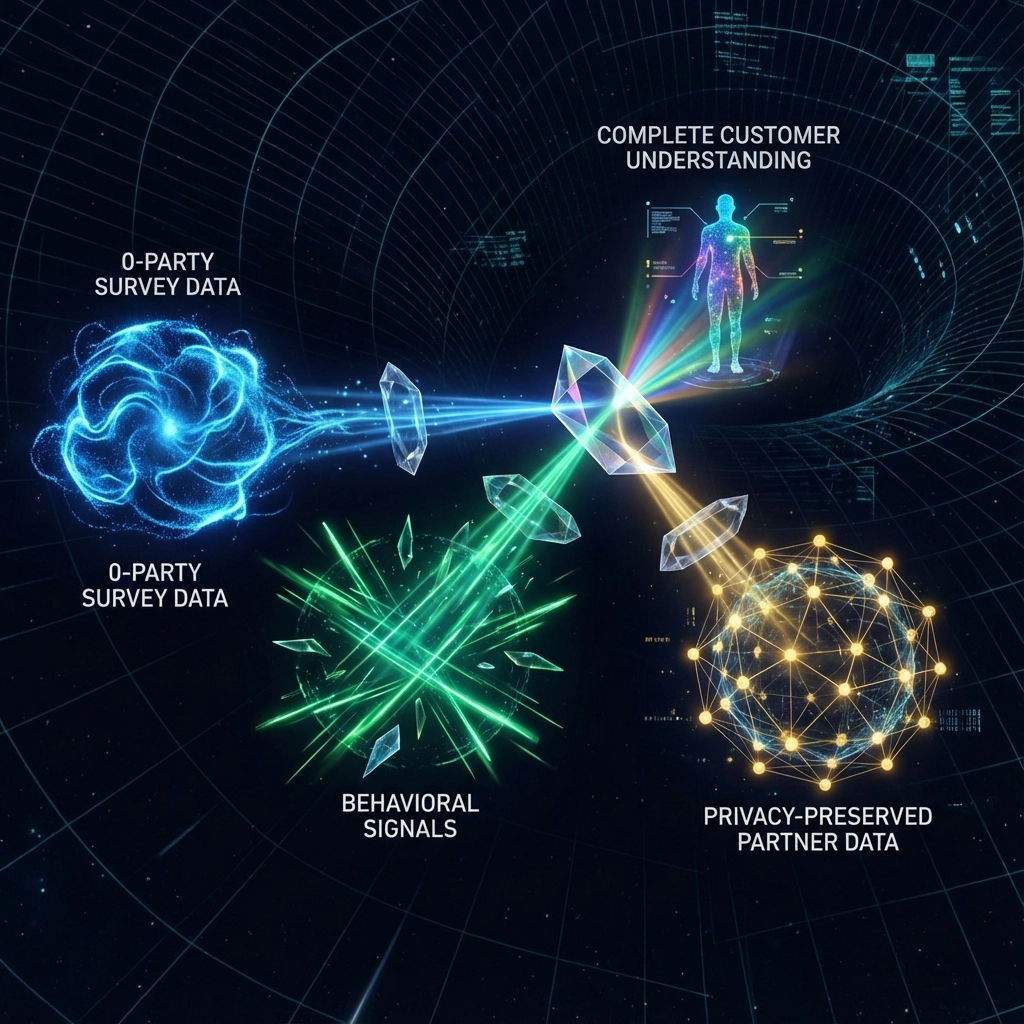
This is the leverage most brands miss. When you understand the complete customer context: not just purchase history: you can deliver the right message at the right moment without sacrificing margin.
Building Segments That Actually Drive Profitability
The strategic shift from RFM to rich segmentation requires rethinking your fundamental assumptions about customer behavior.
Instead of "Champions need retention offers," consider: "High-value customers need exclusive access and early previews."
Instead of "At-Risk customers need discounts," consider: "Disengaging customers need relevance and personal connection."
Instead of "Lost customers need win-back campaigns," consider: "Dormant customers need education about product evolution and new use cases."
This approach transforms your customer communications from reactive promotions into proactive value delivery. Customers don't feel marketed to: they feel understood.
The brands winning market share in 2025 understand this distinction. They've moved beyond segment-and-blast toward segment-and-serve.
The Strategic Implications
This is where the market is moving. The question is whether you're building for it.
RFM segmentation made sense when customer data was limited and promotional tactics drove most purchase decisions. But modern customers are overwhelmed with discounts and immune to spray-and-pray campaigns.
The brands that protect margins while growing retention are those that invest in understanding customer intent, context, and motivation: not just transaction history.
If you're ready to move beyond the limitations of basic RFM segmentation and start building customer relationships that compound value instead of eroding margins, the next step is understanding how AI-powered retention strategies work in practice.
Your customers are already telling you what they need. The question is whether you're sophisticated enough to listen.