Anatomy of a Product-Led Win: From Value Moment to Raving Fan (A Disguised Case Study)
I'll be honest , I would've been the marketing director who rolled their eyes at "AI-powered retention."
After three years of watching vendors demo their "revolutionary dashboards" that basically showed me what I already knew (churn is bad, retention is good), I'd developed a healthy skepticism toward anything with "AI" in its pitch deck. When my CEO forwarded me an email about Niti AI, my first instinct was to file it under "vendor spam."
But our D2C nutrition brand was bleeding margin on a growing customer base, and I was running out of traditional levers to pull.
Here's how a 90-day pilot turned a skeptic into someone who now preaches the AI retention gospel.
The Setup: When Growth Becomes a Margin Problem
Our brand , let's call them "NutriFlow" , was the textbook definition of scaling challenges. $50M ARR, 200K active subscribers, 40+ SKUs across immunity, performance, and wellness categories. On paper, we looked healthy. CAC was stable around $45, LTV hovered at $180.
The problem lived in the details most growth teams overlook.

We were growing at 15% month-over-month, but gross margin was shrinking. Our retention rate looked decent at first glance , 65% after 12 months , but when you segmented by product mix, acquisition channel, and seasonal purchase patterns, the picture got ugly fast.
Some customers were buying our highest-margin immunity boosters and staying for years. Others were cycling through discount-driven performance products and churning after their third order. We were treating both segments identically.
The hidden cost: we were spending $40 per customer to acquire people who'd net us $30 in lifetime contribution.
I'd run the numbers manually. Built pivot tables until my eyes bled. Created cohort analyses that our data team would high-five me for, then watch them collect digital dust because I couldn't translate insights into campaigns fast enough.
That's when desperation made me take the Niti AI call.
Stage 1: The Skeptical Prospect Meeting
The first conversation didn't feel like a typical vendor pitch. Instead of showing me their interface, the Niti AI team asked me to screen-share our existing retention dashboard.
"Walk me through how you currently identify at-risk customers," they said.
I showed them our standard setup: RFM scoring, email engagement tracking, purchase frequency alerts. Basic stuff that every competent retention team runs.
"Okay, now show me how you decide what offer to send to each segment."
This is where I started feeling exposed. We had three playbook campaigns: 10% off for mild risk, 20% off for high risk, and a "we miss you" winback sequence. One-size-fits-all retention.
"What if I told you that 23% of your high-value customers are being trained to wait for discounts because your current logic can't distinguish between price-sensitive bargain hunters and loyalty-driven buyers?"
They pulled up a quick analysis they'd run on our demo data. Showed me how our 20% discount campaigns were actually accelerating churn among customers who didn't need price incentives : they just needed the right product recommendation at the right moment in their health journey.
The insight that hooked me: "You're solving for retention when you should be solving for relevance."
This wasn't another dashboard. This was diagnostic intelligence.
Stage 2: The Value-First Pilot
Most vendors want to start with integration and onboarding. Niti AI suggested we begin with a 30-day analysis sprint using read-only access to our data.
No commitments. No implementation. Just: "Let us show you what your data is actually saying."
Within two weeks, they delivered what I now call "The Report That Changed Everything."
Three insights that immediately shifted how I thought about our business:
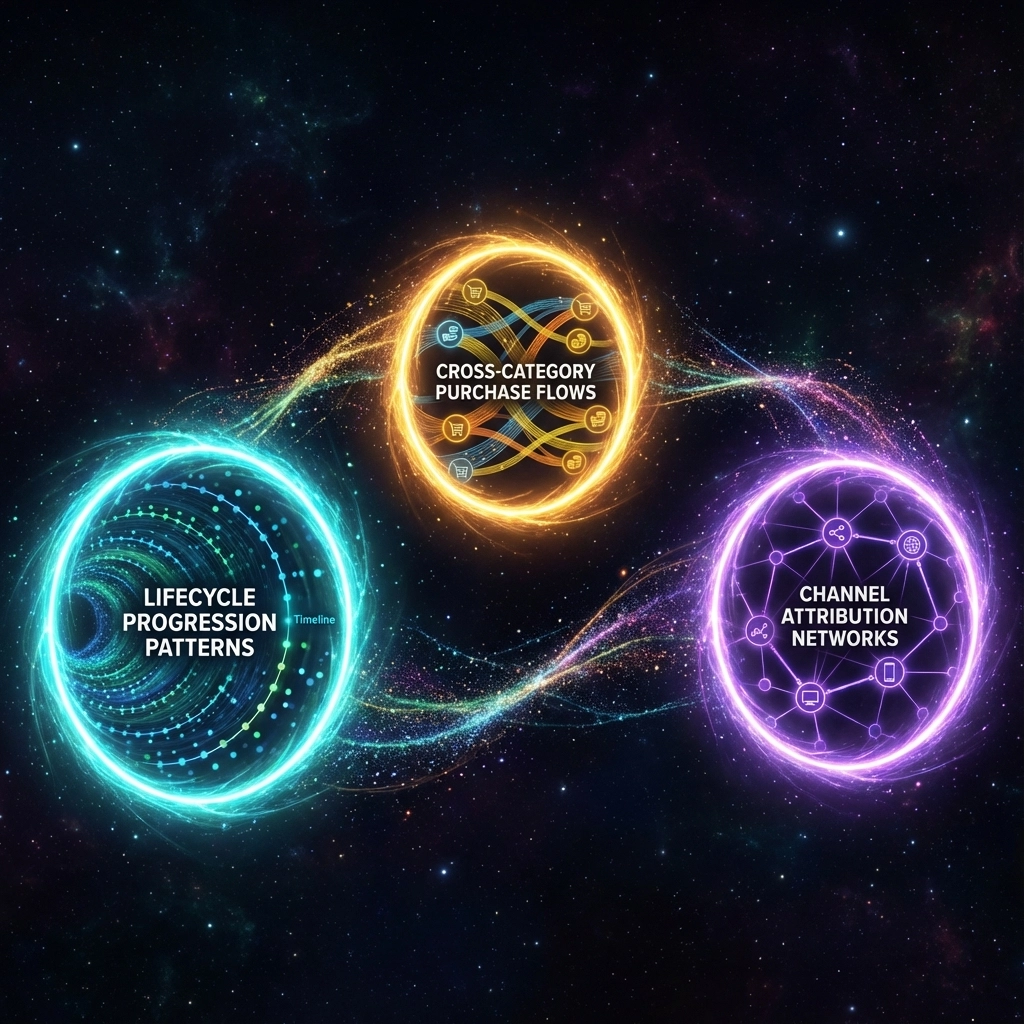
Insight 1: Our churn wasn't seasonal : it was lifecycle-driven. Customers weren't leaving because of weather or New Year's resolutions. They were churning when they outgrew our beginner products but we never graduated them to advanced formulations. 47% of churned customers had purchased the same entry-level product three times in a row before leaving.
Insight 2: Our highest-value segments were hiding in plain sight. Traditional RFM analysis showed our "champions" as high-frequency, recent buyers. But Niti AI's analysis revealed that customers who purchased across multiple categories (immunity + performance) had 340% higher LTV, even with lower purchase frequency.
Insight 3: Our acquisition channels were feeding us different species of customers. Google Ads traffic converted fast but churned at 65% after six months. Instagram traffic took longer to convert but had 78% retention. We were optimizing for speed when we should have been optimizing for stickiness.
But here's what sealed the deal: they didn't just hand me insights. They translated each finding into specific campaign recommendations with projected impact.
"Move customers who've purchased Vitamin C three times to your Immune System Optimization bundle. Based on similar patterns we've seen, this should lift LTV by $23 per customer and reduce churn probability by 31%."
They were solving my insight-to-action problem before I even signed a contract.
Stage 3: The Conversion Moment
The moment I knew we were moving forward happened during week three of the pilot.
I was in our weekly growth meeting, presenting the usual retention metrics, when our CMO asked the question that used to make me sweat: "What's our retention strategy for Q4?"
Instead of my usual hedge about "testing different discount levels," I pulled up the Niti AI recommendations:
- Loyalty Track Campaigns: Graduate customers from single-category purchases to cross-category bundles based on their demonstrated interest patterns
- Lifecycle Progression: Automatically shift customers from beginner to intermediate to advanced products as they demonstrate consistent usage
- Channel-Specific Retention: Different retention playbooks for Instagram-acquired customers (relationship-focused) versus Google-acquired customers (value-focused)
For the first time in three years, our retention plan felt like strategy instead of tactics.
The CMO's response: "This doesn't sound like typical marketing campaigns. This sounds like product development."
Exactly.

The mechanism I'd been missing: retention isn't about convincing customers to buy more of the same thing. It's about evolving the relationship as their needs evolve.
Stage 4: The Implementation Reality
Moving from pilot to full implementation revealed the operational muscle Niti AI had built.
Most AI tools give you insights, then leave you to figure out execution. Niti AI's agents don't just identify that Customer X is likely to churn : they automatically generate the specific email sequence, product recommendation, and offer structure that has the highest probability of retention based on similar customer patterns.
Three months in, the results were starting to compound:
- Margin-positive retention: Instead of blanket discounting, we were upgrading customers to higher-value products. Average order value increased by 18% among retained customers.
- Lifecycle velocity: Time from first purchase to third purchase dropped from 89 days to 61 days because we were proactively guiding customers through their health journey.
- Channel optimization: We shifted 30% of our acquisition budget from Google to Instagram after discovering the LTV differential. Same CAC, 40% higher lifetime value.
But the real win was operational: my retention campaigns went from monthly planning cycles to daily optimization. The AI agents were essentially running micro-experiments continuously, learning from every customer interaction, and adjusting recommendations in real-time.
I went from analyzing last month's data to predicting next week's opportunities.
Stage 5: The Raving Fan Transformation
Six months later, I'm the person forwarding Niti AI case studies to other marketing directors.
Not because I'm a natural evangelist, but because the results are undeniable. Our retention-driven revenue increased by 43% while our retention marketing costs dropped by 28%. We're not just keeping customers longer : we're making them more valuable while they're with us.
The mindset shift was profound: from campaign-driven marketing to intelligence-driven relationships.
Instead of asking "What should we sell this month?" we started asking "Where is each customer in their journey, and what do they need next?"
Instead of segmenting customers by purchase history, we started predicting customer potential based on engagement patterns and cross-category interest signals.
Instead of measuring campaign performance in isolation, we started tracking how each interaction contributed to long-term customer lifetime value.

The Strategic Implication
Here's what I learned from going skeptical to advocate: most marketing teams are fighting retention battles with acquisition weapons.
We're optimizing for conversion when we should be optimizing for progression. We're measuring campaign performance when we should be measuring relationship evolution. We're running retention programs when we should be building retention systems.
The brands winning retention in 2025 aren't the ones with the best discounts or the most personalized emails. They're the ones with the best intelligence about what each customer needs next, and the operational capacity to deliver it automatically.
The question isn't whether AI will transform retention marketing. It's whether you're building the intelligence systems that let you compete in that reality.
If you're still running retention campaigns instead of retention intelligence, the market has already moved past you.
For marketing directors who recognize their own skepticism in this story: book a diagnostic session. Not to see a demo, but to see what your data is actually saying about your retention opportunities.
The pilot approach de-risks everything. The insights speak for themselves.
And if you're still skeptical? Good. That's exactly where I started.